Polarized vs active shutter 3D glasses is a choice between different ways of sending each eye its own picture: passive filters that sort light, or powered lenses that blink in sync with the screen.
This page explains how each system works and how they compare, as part of the wider 3d film production guide. It is an independent informational page, not affiliated with any studio, brand or company.
Why 3D needs glasses at all
Stereoscopic 3D shows a separate picture to each eye. A training handout on stereoscopic 3D explains that on a suitable display the left image is shown only to the left eye and the right image only to the right eye, and the brain fuses them into a sense of depth. If each eye saw every picture, the result would be a blurred double image.
Glasses do the separating. Each system hides the wrong picture from each eye using a different physical trick. The depth settings used when shooting, covered in the page on 3d convergence and interaxial distance, only work if this separation is clean.
The handout names three common approaches: circular polarization with passive glasses, shutter glasses, and anaglyph glasses with colored lenses. This page concentrates on the first and second, which dominate cinemas and televisions.
How polarized glasses work
Polarization is a property of light that describes the direction in which its waves vibrate. According to the Wikipedia article on polarized 3D systems, such a system works by restricting the light that reaches each eye so that each eye sees a different generated view. A pair of images is projected onto the same screen through different polarizing filters, and the viewer wears low-cost glasses with a polarizing filter for each eye.
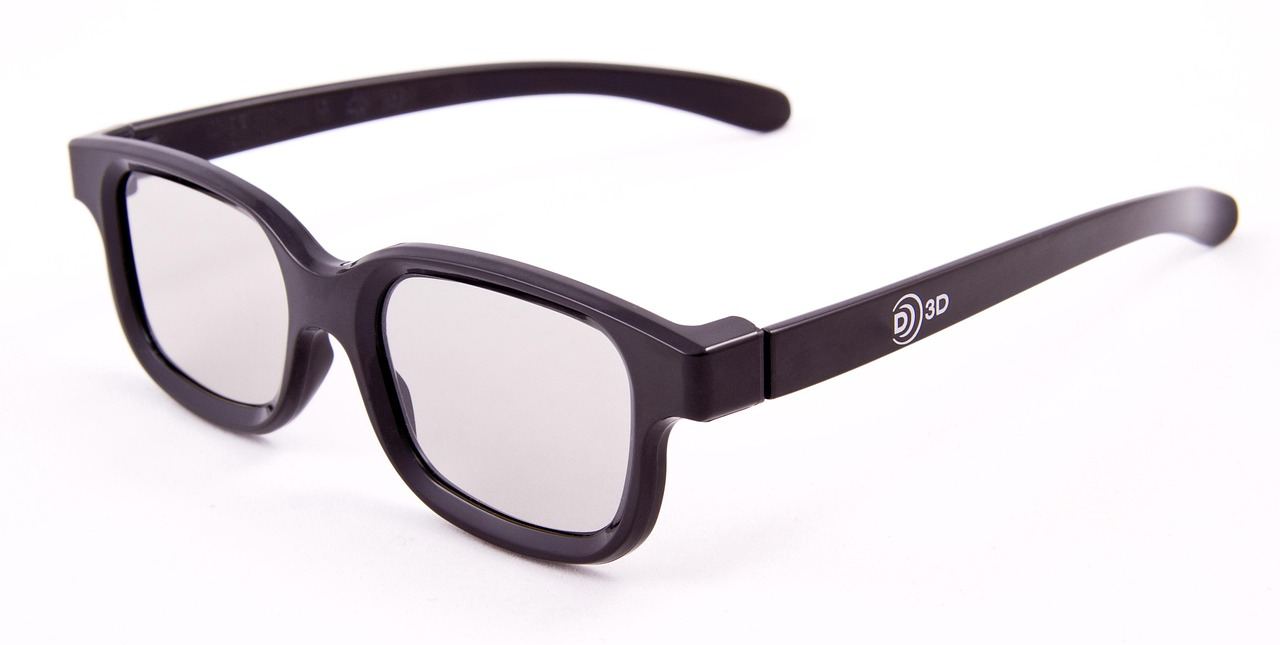
The handout describes the circular version. Each image is circularly polarized by the display, with the left eye polarized clockwise and the right eye anticlockwise. The glasses carry a matching filter for each eye, so the left lens blocks the right eye’s image and the right lens blocks the left eye’s image. Because the glasses need no power, the handout calls them passive.
Circular polarization has an advantage over the older linear kind. The Wikipedia article explains that linearly polarized glasses require the viewer to keep their head level, because tilting causes the left and right images to bleed into each other, whereas with circular filters the viewer can tilt their head and still maintain left and right separation.
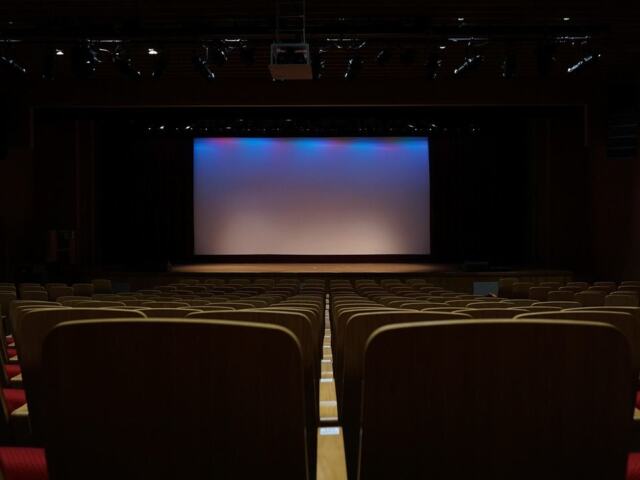
Cinemas that use this method need a screen that keeps polarization. The same article notes that polarized light reflected from an ordinary motion picture screen typically loses most of its polarization, but the loss is negligible with a silver or aluminized screen. It also says that in the RealD system only one projector is needed, because the left and right eye images are displayed alternately through a switching filter.
- Glasses: light, cheap, no battery.
- Screen: a special polarization-preserving screen in cinemas.
- Weakness: the filters absorb light, so the image is dimmer.
How active shutter glasses work
Shutter glasses take a different approach: time instead of polarization. The Wikipedia article on active shutter 3D systems says the system presents the image meant for the left eye while blocking the right eye’s view, then presents the right-eye image while blocking the left eye, repeating this so rapidly that the interruptions do not interfere with the fusion of the two images into one 3D image.
The same article describes how the glasses do this. Each lens contains a liquid crystal layer that becomes opaque when voltage is applied and is otherwise transparent, and a timing signal makes the lenses alternate in step with the screen. The signal can be sent by wire or wirelessly, for example by infrared or radio. The handout agrees that active glasses need a battery to power their synchronization sensor and LCD lenses.
The strengths and weaknesses mirror those of polarization. Shutter glasses are color neutral and can keep the full resolution of the screen for each eye, but each eye sees the screen only part of the time, so the picture is dimmer. The Wikipedia article adds that flicker can appear except at high refresh rates, and that mismatched equipment can produce ghosting. The handout also describes them as relatively expensive to make and buy.
- Glasses: heavier, battery powered, relatively costly.
- Screen: works with a normal display or projector that supports it.
- Weakness: flicker risk, battery upkeep and a dimmer picture.
Side-by-side comparison
Neither system is better in every setting. The right choice depends on cost, venue and display.
- Cost per viewer: polarized glasses are very cheap; shutter glasses are far more expensive.
- Power: polarized glasses need none; shutter glasses need batteries and a sync signal.
- Head tilt: circular polarization tolerates tilting; shutter glasses do not depend on orientation.
- Resolution: polarized systems may split resolution between eyes on some displays; shutter systems can retain it.
- Crosstalk: both can show ghosting if poorly set up, which the handout describes as signal leakage between the eyes.
Cinemas have mostly favored passive glasses for practical reasons: they are cheap to hand out, easy to collect and clean, and need no charging. Shutter systems have been more common in homes, where a single set of glasses is kept by one household.
Other systems: anaglyph and glasses-free
Other approaches deserve a mention. In anaglyph 3D, the handout explains, the images are individually colored, typically red and cyan, and superimposed as a single image, and matching colored filters in the glasses let each eye see only its own picture. It is the cheapest method and works on any screen or printed page, but color reproduction suffers, which is why it is rare in cinemas.
The handout’s glossary also defines an autostereo display as a display that allows the viewer the illusion of depth without the aid of special glasses. These displays use optics built into the screen to steer different pictures toward each eye, and they usually work only from certain viewing positions. For group viewing in a cinema, glasses remain the practical choice.
Whatever the method, the production side is the same: a pair of pictures is made and carried together, then separated at the screen. The comfort limits discussed in the production guide apply to every system, because glasses cannot repair excessive depth or misaligned pictures.
Glasses in large-format cinema
Large-format screens use the same ideas. According to the Wikipedia article on IMAX, one method of IMAX 3D is to use polarizing filters to oppositely polarize the light used in projecting each image, with glasses oriented to match, while another alternates the two projections and uses liquid crystal shutter glasses synchronized with the projectors. The wider topic is covered in the page on imax 3d.
The choice also affects how bright a giant screen can look, since each system loses some light. Cinema operators weigh brightness, cost and audience comfort when they choose between them.
Frequently asked questions
Which type of 3D glasses is cheaper?
Show answer
Passive polarized glasses are very cheap to make and buy because they need no power. Active shutter glasses are relatively expensive.
Do polarized glasses need a special screen?
Show answer
In cinemas, yes. A silver or aluminized screen keeps the polarization of the reflected light.
Why do shutter glasses need batteries?
Show answer
They contain LCD lenses and a synchronization sensor that must be powered to block each eye in step with the screen.
Can I tilt my head with polarized glasses?
Show answer
With circular polarization, yes. Linear polarization requires the head to stay level.