The history of 3D film stretches from Victorian stereoscopes to modern digital cinema, and it follows one idea: show each eye a slightly different picture. Early viewers used hand-held devices, and later audiences wore glasses in theaters.
This overview traces the main steps and points to the 3d film production guide for how stereoscopic pictures are made today. It is an independent informational page, not affiliated with any studio, brand or company.
The stereoscope comes first
Stereoscopic pictures are older than cinema. According to a history of the invention from the Royal Society, Charles Wheatstone published the first description of his stereoscope in the 1838 volume of the Philosophical Transactions of the Royal Society. The device was designed mainly to study binocular vision, and it presented two images of the same scene at slightly different angles so that the brain merged them into a sense of depth.
Early users of the instrument had to draw their own picture pairs, which made good results difficult. Photography arrived at almost the same moment, and the same Royal Society account says that as early as 1840 Wheatstone asked William Henry Fox Talbot to take the first pairs of stereoscopic images at Lacock Abbey. Photographs supplied the realistic pairs that drawings could not.
A second inventor, David Brewster, built a lenticular stereoscope that used prisms rather than mirrors. The Royal Society account describes it as a more compact device than Wheatstone’s, and says its ease of use helped it gain popularity.
The key point for film is the principle, not the device. Two pictures taken from slightly different positions, delivered one to each eye, create depth. Every later system, from red and cyan paper glasses to modern cinema projection, applies that same principle with different technology.
Early experiments on the screen
Once moving pictures existed, inventors tried to give them depth as well. A timeline from HISTORY reports that in 1922 a company called Perfect Pictures produced what is widely regarded as the first 3D feature film, The Power of Love, but that it was not released in its intended 3D format because of technical and commercial challenges.
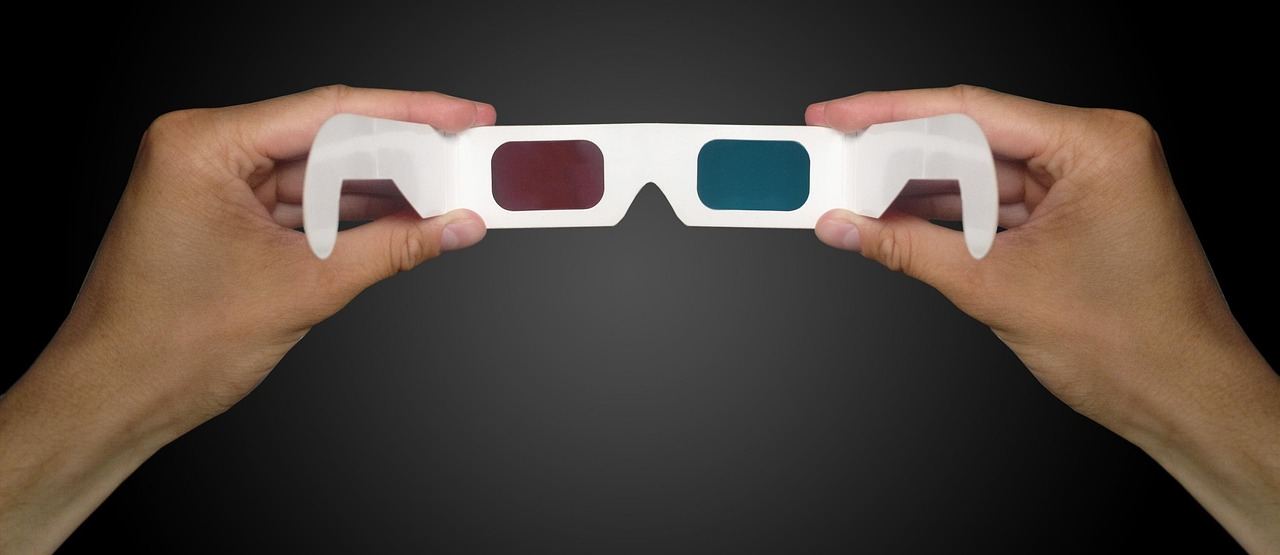
The same timeline notes a notable public demonstration in 1939, when Chrysler worked with Polaroid at the World’s Fair to create a promotional film in which parts of a car seemed to fly off the screen. Polarizing filters, which sort light by its orientation, became important because they let one projected picture reach the left eye and another reach the right. Early systems also used anaglyph glasses with two colored lenses, an approach that is cheap but limits color.
These early efforts show a pattern that repeats in the later story. The technology could produce an impressive moment, but making it routine for everyday cinemas needed reliable cameras, projection and a business reason to use them.
- Brewster: compact
- Natural Vision: two cameras
- Revival: 2000s
The first big boom
The most significant breakthrough came in the early fifties. The HISTORY timeline says Milton Gunzburg and Friend Baker developed the Natural Vision camera system, which used two cameras mounted side-by-side, one representing the left eye and the other the right, and that filmmakers could adjust the lenses and the point of convergence. That control let them decide how far objects seemed to extend toward the audience or recede into the background.
Studios had a reason to try. Television was drawing people away from cinemas, and studios were looking for events that a living-room set could not match, so they promoted widescreen formats and also experimented with 3D. On November 26, 1952, Bwana Devil was released, and the timeline credits it as the first feature-length 3D film in color, kick-starting the 3D craze.
The timeline adds that pretty much every studio went into 3D production from January 1953, and that Warner Bros.’ House of Wax followed soon after Bwana Devil’s rollout and showed how lucrative 3D could be.
The craze was short. Projection was a practical problem: the timeline explains that in order for the illusion to work, two 35-millimeter projectors had to be run simultaneously, and if they were even a second off, viewers’ eyes would strain and they would get headaches. Complaints and refunds followed, and the same source says studios stopped requiring 3D screenings by October 1953, with 3D movies pretty much dead by the summer of 1954 according to the historian quoted there.
Why it faded and why it returned
The first collapse was about execution as much as novelty. The detailed reasons behind the later cooling of the format are covered in why 3d movies declined.
The format did not disappear. The HISTORY timeline quotes the founder of the 3-D Film Archive saying that the trend tends to return every so often when a new generation, curious about something it has not experienced, arrives. He lists some titles in the seventies, a short revival in the eighties and a big resurgence in the 2000s with Hugo and Avatar, and he adds that 3D does not lend itself to every movie.
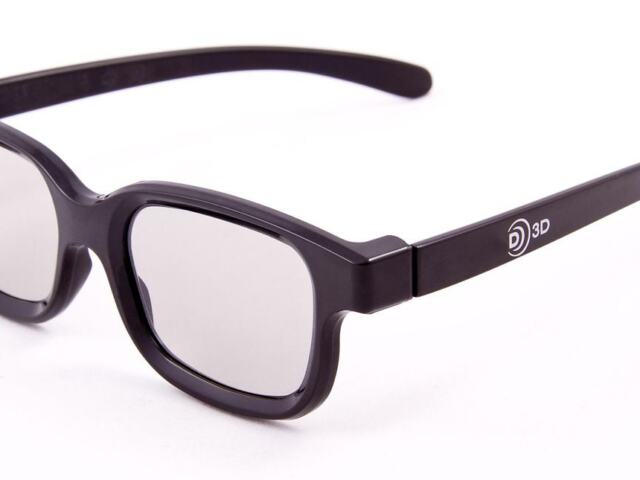
The technical shift behind that later revival was the move from film to digital production and projection. Digital cameras are easier to match and synchronize than film cameras, and one digital projector can show both eyes’ pictures, which removes the two-machine alignment problem of the first boom. Modern systems also use circular polarization or shutter glasses rather than the paper glasses of earlier eras.
What the history teaches filmmakers
Looking back, each wave of 3D rose when the technology became dependable and fell when comfort or story quality slipped. Filmmakers today carry those lessons into planning, treating depth as a storytelling choice and avoiding the extreme effects that tired audiences in the past.
For a clear explanation of the optics behind every system in this history, see how stereoscopic 3d works. The history above also shows how much of the craft is old: cameras placed apart like eyes, a convergence setting, and a way to separate the two pictures at the screen.
Readers who want the practical side can follow the planning, shooting and finishing steps in the production guide linked above, which applies the lessons of this history to current work.
Frequently asked questions
Who invented the stereoscope?
Show answer
Charles Wheatstone published the first description of his stereoscope in 1838, according to the Royal Society. David Brewster later developed a more compact lenticular version.
What is often called the first color feature in 3D?
Show answer
Bwana Devil, released in 1952, is credited as the first feature-length 3D film in color, according to the HISTORY timeline.
Why did the first 3D boom end?
Show answer
Projection needed two machines in step, viewers complained of eye strain, and many films were weak. Studios stopped requiring 3D screenings in 1953.
Has 3D film come back since?
Show answer
Yes. It saw a short revival in the eighties and a big resurgence in the 2000s, though it does not suit every film.