How stereoscopic 3D works comes down to binocular vision: each eye is shown a slightly different picture of the same scene, and the brain merges the pair into a single image with depth.
This page explains the mechanism, from the eyes to the screen, and links to the wider 3d film production guide. It is an independent informational page, not affiliated with any studio, brand or company.
Two eyes, two viewpoints
Depth perception starts in the head. A training handout on stereoscopic 3D notes that human eyes are approximately two-and-a-half inches, or 6cm, apart, so they see the same scene from slightly different angles. The brain combines the two images to gauge distance, and the handout calls the result binocular vision.
Depth also comes from other clues. The handout lists relative size, occlusion, shadows and relative motion as information that the brain processes together with the difference between the eyes’ views. That is why a flat photograph can still suggest depth, and why stereoscopic 3D works best when these clues agree with the offset between the two pictures.
The offset itself has a name. The handout calls the horizontal offset between the two views a binocular disparity. Objects that are close show a large disparity, while distant objects show almost none, and the brain reads that difference as distance.
Recreating the effect with two cameras
Stereoscopic filmmaking copies this arrangement. Two cameras photograph the same scene from slightly different positions, and the same handout says matched cameras are typically spaced at roughly adult eye distance, about 6cm. On playback, a display shows the left picture only to the left eye and the right picture only to the right eye, and the brain fuses them into the impression of depth.
Two settings shape the result. The distance between the cameras is called the interaxial, and the handout explains that the wider the interaxial, the more depth is captured. The other is convergence, which determines where an object appears in relation to the screen. Filmmakers use both together, as described in the pages on camera setup and depth planning.
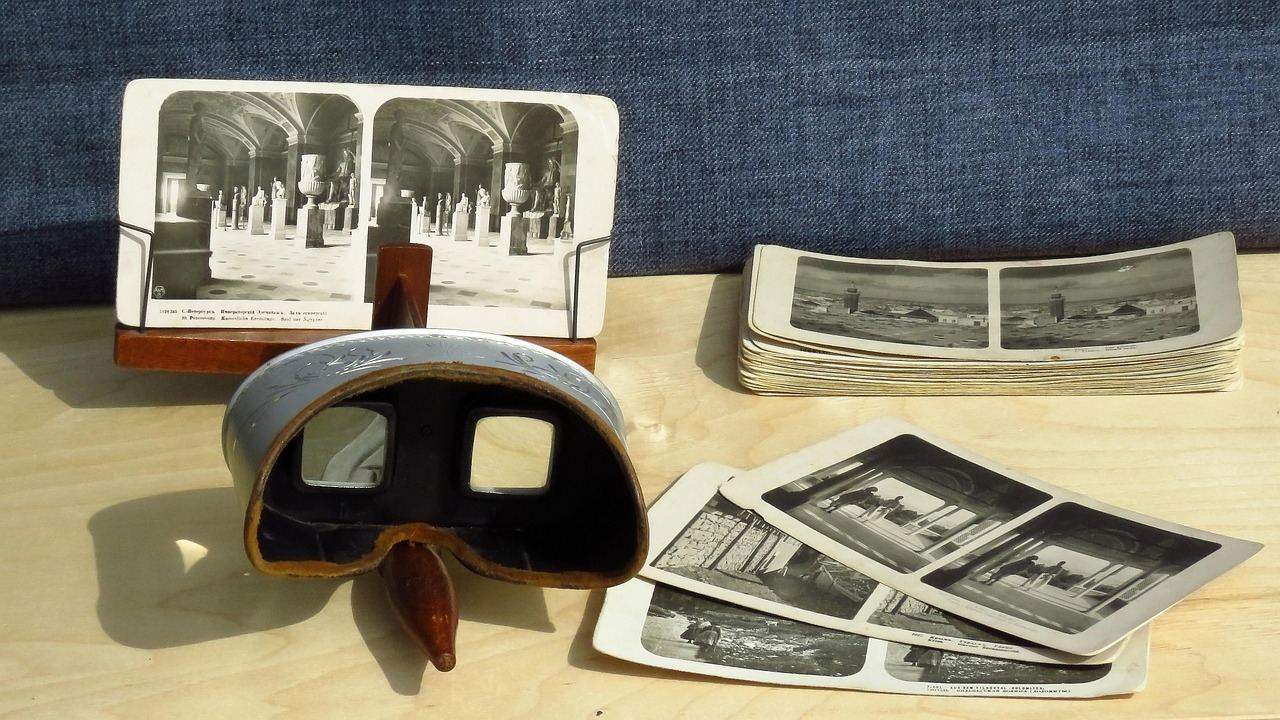
The idea is older than cinema. The Royal Society notes that Charles Wheatstone published the first description of his stereoscope in 1838, and that it showed two images of the same scene at slightly different angles. In a Royal Society account of the invention, those two views are described as forcing the brain to merge the images and interpret them in three dimensions. The longer story is told in the history of 3d film.
Parallax and the screen plane
Where an object seems to sit depends on how the two pictures are placed on the screen. The handout defines screen parallax as the separation of the left and right images on the display, and describes three cases.
- Zero parallax: the left and right images are in the same position, so the object appears at the screen plane.
- Positive parallax: the image is shifted to the left for the left eye and to the right for the right eye, so the object appears behind the screen.
- Negative parallax: the image is shifted to the right for the left eye and to the left for the right eye, so the object appears in front of the screen.
Filmmakers use these three zones to decide where the action sits. Most of a scene usually stays at or behind the screen for comfort, with a few moments in front for emphasis. How much control a team has over parallax also depends on whether the film is shot with two cameras or built from flat footage, a choice compared in 3d conversion vs native 3d.
Why 3D can tire the eyes
Real life links two actions: the eyes focus and converge on the same point. The handout explains that when viewing 3D, the eyes always focus on the screen but may converge anywhere along the depth axis. That mismatch is part of why poorly made 3D can cause fatigue.
The handout lists several faults that make it worse. Extreme convergence can turn the eyes too far inward so that the viewer cannot fuse the image, and background divergence beyond the distance between the eyes forces the eyes outward, which is unnatural and uncomfortable. Vertical misalignment between the pictures also forces the eyes to move apart vertically. Careful shooting and editing prevent these faults, and that is the reason 3D production has dedicated planning and monitoring.
Depth limits and common errors
Every scene has a limit to the depth that viewers can fuse. The handout defines a depth budget as the maximum positive and negative parallax allowed for comfortable viewing, expressed as a percentage of screen width. Pushing objects too far both in front of and behind the screen at once makes the pair impossible to fuse, so filmmakers plan the budget shot by shot.
Several other effects follow from the same mechanism. The handout describes a cardboard effect, in which the interaxial is smaller than the viewer’s eye spacing and objects look like flat cut-outs, and an edge violation, in which an object in front of the screen is cut off by the screen frame. Because the frame suggests the object is behind the screen while the parallax suggests it is in front, the viewer receives conflicting cues. A crop mask on the edges of the two images, known as a floating window, is one fix.
Perceived size also changes with depth. In the handout’s example, a large airliner or cruise ship looks real when placed far away in positive parallax, but looks like a scale model when it is placed close in negative parallax. These effects show that stereoscopic depth is not a simple setting. It is a set of choices that interact with the subject, the lens and the screen.
Getting each picture to the right eye
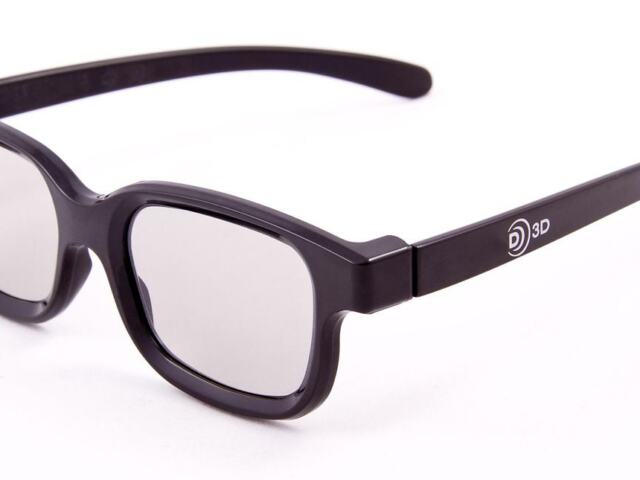
The final step is separation. Both pictures reach the screen, and glasses make sure each eye sees only its own. The handout describes three common systems.
- Circular polarization (passive): the display polarizes the left and right images in opposite directions and the glasses have matching filters, so each lens blocks the other eye’s image. The glasses need no power and are cheap to make.
- Shutter (active): LCD lenses alternately black out each eye in sync with the screen, so rapidly that the viewer does not notice. They need a battery and are relatively expensive.
- Anaglyph: the two images are colored, typically red and cyan, and superimposed, and matching colored filters in the glasses let each eye see only its own picture.
The handout also mentions autostereo displays, which give the illusion of depth without special glasses. A full comparison of the two main cinema and television systems appears in the page on polarized and shutter glasses, linked from the production guide.
Frequently asked questions
Why do we see depth with two eyes?
Show answer
The eyes sit apart, so each sees the scene from a slightly different angle. The brain combines the two views to judge distance.
What is parallax in 3D film?
Show answer
Parallax is the separation of the left and right images on the screen. It decides whether an object appears behind, at or in front of the screen.
Why do 3D glasses exist?
Show answer
They separate the two pictures so that each eye sees only the image meant for it, using polarizing filters, synchronized shutters or colored lenses.
Can 3D cause eye strain?
Show answer
It can when depth is excessive or the pictures are misaligned, because the eyes are asked to focus on the screen while converging elsewhere.